Why This Rural Health Moment Feels Personal
When I was growing up in the Missouri Ozarks, mental health care was something you planned your life around. If someone in my family needed help, it usually meant driving two or three counties away. You packed the day. You took time off work. You hoped the appointment was worth the trip.
At the time, I didn’t see it as a system problem. It was just how things were.
Years later, I would come to understand how much effort it takes to deliver care when distance, weather, workforce shortages, historical underinvestment, and infrastructure gaps all work against you. That understanding is deeply personal, and it is also central to why this moment matters to me professionally in my role at Streamline.
I have delivered behavioral health services by phone, video, text, and chat. I have met people where they were standing, sitting, waiting, or detained. Street corners. Boat docks. County jails. Clinics. Schools.
I helped stand up tele behavioral health programs in rural and frontier communities long before the pandemic. In more than one instance, telehealth wasn’t a convenience. It was the difference between someone getting care that day or waiting weeks.
Distance Shows You What Systems Are Made Of
Later, I ran a community mental health center in Alaska. Our two primary hubs were roughly 1,700 miles apart. There were no roads between them. Access depended on ferries, small planes, and weather that did not negotiate.
I still remember days when a flight was grounded due to fog or wind, and we had to decide whether a clinician could connect remotely or whether a patient would simply wait. Sometimes that decision mattered more than any treatment plan we had written.
Experiences like that change how you read legislation.
A Rare Chance To Shape What Comes Next
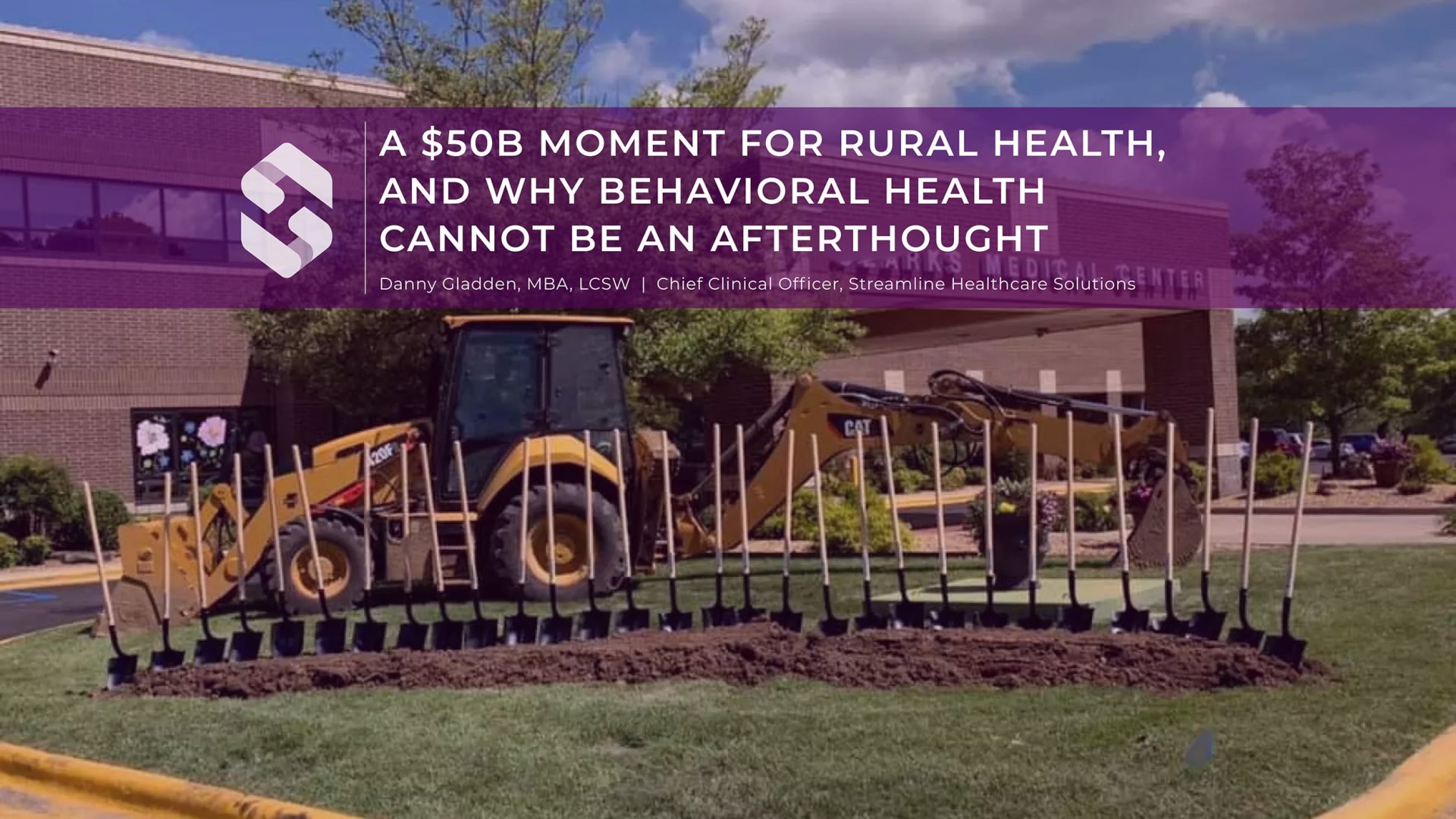
The current federal investment in rural health represents something we don’t often see in health care: a chance to shape the future rather than adapt to it after the fact. As the largest rural health investment in recent history, this funding gives states a real opportunity to rethink how care works in rural communities. And importantly, behavioral health is a core part of what this transformation is meant to address. This is not about adding resources to existing structures and hoping they stretch far enough. It’s about designing systems that reflect how care actually happens, across distances, across settings, and across the realities of rural life. Rural care has never been confined to rural buildings. It has always required movement. Patients traveling. Clinicians traveling. Care shifting locations based on need, access, and circumstance.
Care that moves requires records that move.
Behavioral Health Is Where Systems Feel Strain First
In every rural system I have worked in, behavioral health and substance use services are where stress shows up earliest. Workforce gaps widen faster. Administrative friction takes a heavier toll. Access delays compound quickly.
When those services weaken, the effects ripple outward. Emergency departments absorb demand they were never designed to handle. Law enforcement becomes a default responder. Families carry more than they should.
Policy only works when it recognizes what clinicians already know.
You cannot stabilize rural health without strengthening behavioral health operations and the infrastructure that supports the people doing the work.
Technology Should Remove Friction, Not Create It
Rural and frontier care is inherently mobile. A person might receive care in a clinic one month, via telehealth the next, and in a completely different setting during a crisis. Their story shouldn’t restart with very new setting. Too often, systems are designed around where care happens rather than how lives unfold.
If this moment is used well, states and providers can move toward records that are accessible, portable, and meaningful wherever care occurs. Technology that supports continuity instead of fragmentation. Tools that reduce administrative burden rather than adding to it.
This is not about innovation for its own sake.
It is about operational dignity for clinicians and consistency for the people they serve.
What Would Be A Missed Opportunity
The risk is not failure. The risk is settling.
Assuming rural care is just a smaller version of urban care.
Assuming technology should adapt to policy instead of practice.
Assuming short-term fixes are enough for longstanding challenges.
Those assumptions fall apart in places where access depends on trust, geography, and conditions no system can fully control.
Choosing Intention Over Inertia
I think about my family in the Ozarks. I think about patients in Alaska waiting on ferries and weather reports. I think about clinicians doing extraordinary work with systems that were never built for the reality in front of them.
This moment deserves intention.
Providers need to engage early and advocate for solutions that reflect how care actually happens. States need to design for continuity, not just compliance. Technology partners need to support mobile, human centered care at scale.
At Streamline Healthcare Solutions, we believe this moment is an opportunity to build systems that respect the realities of rural care while making it simpler for clinicians to do their work.
Because distance should never decide whether someone gets help.
Curious how organizations are supporting mobile, multi-setting behavioral health care in practice? Learn how SmartCare supports continuity of care across rural and community-based settings.