Oakbrook Terrace, IL – [November 20, 2019] – Streamline Healthcare Solutions announced today they can successfully transmit both 837 claims and 270/271 eligibility inquiries through the SmartCare EHR platform for Indiana Medicaid. INXIX, Indiana State’s preferred vendor who completed the set up and testing process for Indiana Medicaid, required Streamline to complete several test runs for each client organizations business process. Commercial clearinghouses and payors are required to go through set up and testing processes as well. Streamline’s first Indiana client, Porter-Starke Services, was tested based on multiple scenarios of checking for eligibility of which all have been approved via INXIX.
The Importance of Value-Based Care in Behavioral Health

As the healthcare field evolves into a more efficient system, key changes allow for advances that are revolutionizing the industry. An innovative new value-based care model has expanded the focus to reducing costs, decreasing medical errors, and achieving better overall health for clients. Providers are increasingly turning to this value-based healthcare model in order to achieve value-based results.
Under this model, providers are rewarded for helping individuals reduce the negative impact chronic disease can have on a client’s life and the number of occurrences of chronic diseases. Rather than being paid by each service they prescribe or perform, they are rewarded based on the health of the client.
A value-based model can:
- Lower costs for clients
- Increase client satisfaction
- Offer reduced health risks
- Align prices with outcomes
- Lead to better overall health
This model is spreading through the primary care industry and while it’s had a positive impact, the behavioral health industry has been slower to adopt it.
Streamline Healthcare Solutions And Harbor Present At MHCA’s Fall Conference In Atlanta
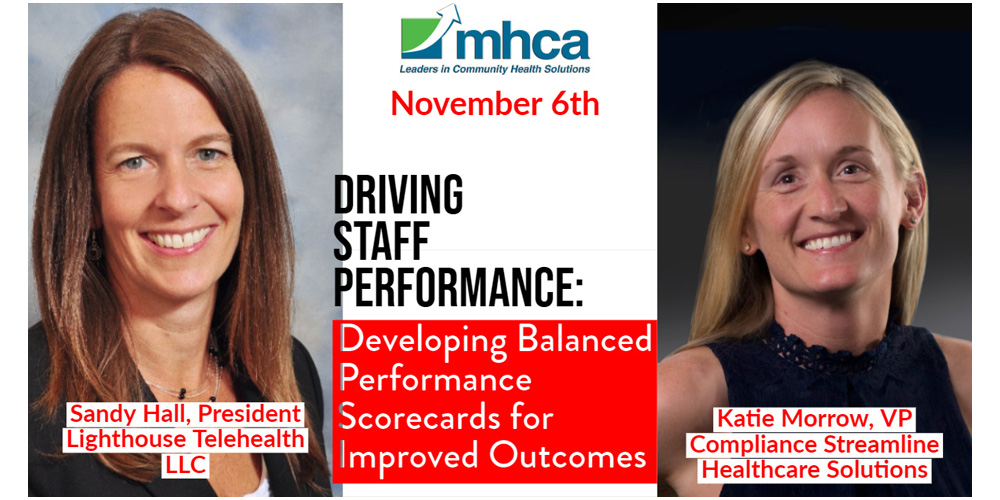
Oakbrook Terrace, IL – [October 30, 2019] Streamline Healthcare Solutions (Streamline) announced they will be collaborating with Harbor in a workshop at the upcoming MHCA annual fall conference in Atlanta, Georgia. The workshop Driving Staff Performance: Developing Balanced Performance Scorecards for Improved Outcomes will help attendees identify clear measurements for key performance indicators and accountability as well as develop a balanced scorecard to motivate staff and improve client outcomes. As agency funding becomes increasingly dependent on quality and having a clear return on investment, it’s imperative staff are equipped with the tools to accomplish their goals and perform effectively for overall better outcomes.
Choices Inc. to Partner with Streamline for SmartCare MCO/EHR Platform
Oakbrook Terrace, IL – [October, 15 2019] – Streamline Healthcare Solutions and Choices Inc. of Indianapolis, IN have entered into an agreement to become the organization’s new software vendor. Streamline’s SmartCare software platform was found to be uniquely situated in meeting Choice’s needs for both MCO functionality and a provider EHR within a single product offering.
Charlotte Behavioral Health Care Chooses Streamline’s SmartCare EHR For Its Ease Of Use And Flexibility
Oakbrook Terrace, IL – [October 1, 2019] Charlotte Behavioral Health Care (CBHC) and Streamline Healthcare Solutions (Streamline) formed a partnership to help move their current legacy system to one integrated electronic health record platform. CBHC is based in Punta Gorda, Florida and has four locations servicing patients across seven counties. They provide a wide range of services including mental health, substance abuse, therapeutic family care, crisis, and detox services. With SmartCare EHR, CBHC will be able to leverage the technology to go above and beyond to deliver personalized care that is convenient, timely and effective while remaining innovative and flexible.
Better Technology Access for a Better Tomorrow

With a rapidly growing need for better mental health care, easy accessibility for treatment sources is vital. Due to technology advances, there are more possibilities than ever to find client care in a reliable, secure way. According to a 2017 report published by Mental Health America, although more than 43 million Americans have a mental health condition, many of those individuals lack access to healthcare. As a growing epidemic that affects a vast number of people globally, innovative solutions are being developed and utilized to change the landscape of mental health care for the better.
Saginaw Psychological Services Is Live With Streamline’s SmartCare Electronic Health Record
Kalamazoo, MI – [July 31, 2019] – Saginaw recently launched the SmartCare Electronic Health Record provided by Streamline Healthcare Solutions. We are proud to partner with Saginaw by providing our … Read more
The Growing Need for More CCBHCs and Their Uncertain Future

CCBHCs are responsible for directly providing (or contracting with partner organizations to provide) nine required types of services, with an emphasis on the provision of 24-hour crisis care, utilization of evidence-based practices, care coordination, and integration with physical health care. In return for providing these services, they receive an enhanced Medicaid reimbursement rate based on their cost of care. But, the time limit on this healthcare experiment is coming to a close. Will the progress made by these clinics be enough to convince Congress to extend funding for the program? The question should be answered soon.
The Whole Person Care Approach: How Using Technology Can Impact Quality Improvement and Population Health Monitoring

California’s Section 1115 Medicaid waiver which will run through December 2020, Medi-Cal 2020, includes a $3 billion pilot program to improve care for Medi-Cal beneficiaries by supporting local efforts that embrace the Whole … Read more
The Value of Data in a Value-Based Market

Many behavioral health organizations are required to deliver data to outside funders, to track performance and client health. This is part of a health model called “value-based healthcare.” But if organizations are only collecting this information to satisfy funders, it can seem like a tedious and overwhelming process. Understanding the true significance of data in a value-based healthcare market can help healthcare providers actively utilize this information to improve the quality of care.